
The victory of Governor Ademola Adeleke in Saturday’s Osun governorship election is undoubtedly a significant political development. However, those interpreting it as a template for the 2027 governorship election in Oyo State should exercise caution.

Osun is not Oyo, and the political realities, personalities, voting patterns, and underlying grievances in both states differ substantially.
Adeleke secured 511,067 votes against APC candidate Bola Oyebamiji’s 444,815, winning 19 of Osun’s 30 local government areas. This outcome reflects the will of the electorate in Osun and must be respected.
However, it is an oversimplification to suggest that an Osun victory automatically confers a political advantage on Governor Seyi Makinde or validates any preferred political arrangement in Oyo State.
Indeed, Makinde should not conflate Adeleke’s victory with his own political performance. Regardless of any private relationships, consultations, or strategic alignments among political actors, the election result does not establish that Makinde was instrumental in delivering Osun to Adeleke.
Adeleke won because Osun voters made a decisive choice. It is therefore misleading to appropriate that outcome as evidence of Makinde’s political dominance. A more pertinent question is what Makinde has achieved with the considerable trust placed in him by the people of Oyo State.
ALSO READ: OsunDecides2026: Adeleke Wins 19 LGs, Oyebamiji of APC Secures 11 LGs
After several years in office, segments of the population across various zones continue to express concerns that their expectations have not been fully met. Communities in Oke-Ogun, Ibarapa, and those affected by controversies surrounding the Ibadan Circular Road project, among others, have raised legitimate issues that require substantive engagement rather than political rhetoric.
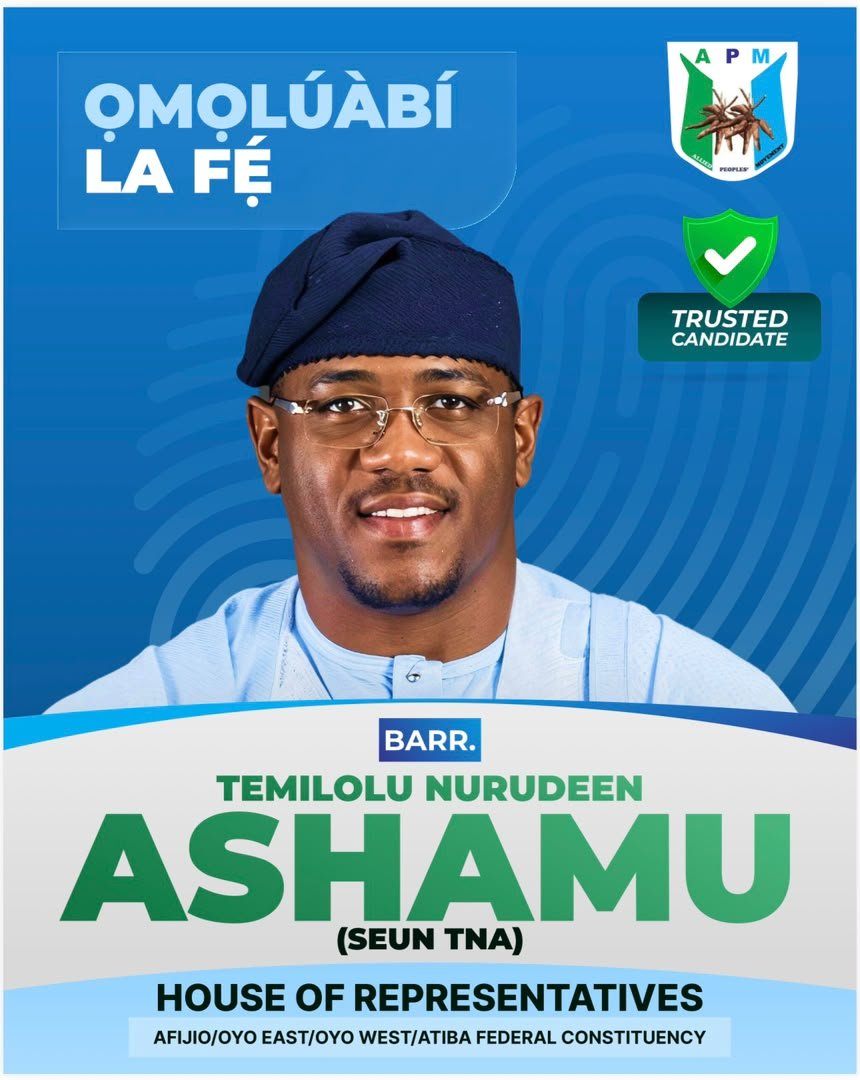
It is within this context that the reported positioning of Bimbo Adekanmbi as a potential successor by Makinde through the Allied People’s Movement (APM) warrants careful examination. Even with Makinde’s hand in Adekanmbi’s candidature, the electorate will inevitably assess his credentials, experience, and political capacity alongside those of Senator Sharafadeen Alli.
Such a comparison is straightforward. When placed side by side in terms of political experience, public service exposure, legislative record, and demonstrated engagement with constituents, the contrast is evident.
It is akin to placing a developing political figure alongside a seasoned statesman and evaluating their respective depth of experience as well as readiness for higher responsibility. This is not a matter of disparagement, but of objective political assessment.
Senator Alli is not a newcomer to the political landscape seeking recognition. He is a serving senator, a legal practitioner, and an experienced politician with extensive exposure to governance and the complexities of Oyo State politics.
His supporters therefore argue that the 2027 contest should be anchored on competence, experience, and demonstrable capacity, rather than succession arrangements formulated within political establishments.
What should concern the Makinde political structure is the assumption that popularity within government automatically translates into electoral success for a preferred successor. History consistently shows that it does not. Political influence must be continuously earned at the grassroots level; it cannot be inherited through endorsement alone. While incumbency provides institutional advantage, the electorate ultimately determines whether continuity, change, or an alternative direction is preferred.
Adekanmbi’s challenge, therefore, extends beyond securing a party nomination. He must persuade party members and the broader electorate that he possesses the requisite competence and vision to lead the state.
Reports of dissatisfaction among certain party stakeholders who feel marginalised or inadequately engaged could pose a significant challenge if not addressed through genuine reconciliation. Political parties derive their strength from inclusivity, and no candidate can afford to disregard internal grievances.
The situation is further complicated when campaign communication is handled by political actors perceived by critics as lacking a nuanced understanding of the state’s political history and electoral dynamics. Poor messaging, inaccurate assertions, and dismissive references to key stakeholders risk undermining a campaign rather than strengthening it.
ALSO READ: Osun Victory: YYC Congratulates Adeleke, Says Tinubu’s Democratic Leadership Will Pay Off in 2027
The lesson from Osun, therefore, is not that Makinde has consolidated political dominance in the Southwest or that his preferred succession plan in Oyo is assured. Rather, it is a reminder that electoral outcomes are ultimately determined by voters, who are capable of defying political expectations and institutional projections.
Oyo State will chart its own course. The electorate will evaluate the performance of the current administration, assess competing candidates, and determine whether continuity or change best serves their interests.
For Senator Sharafadeen Alli and his supporters, the task ahead is clear: strengthen internal cohesion, engage all geopolitical zones, communicate directly with the electorate, and present a credible and compelling alternative.
Osun has made its choice for Osun. In 2027, Oyo people will make their own decision. When that time comes, no political calculation, institutional advantage, or external endorsement will substitute for the informed judgment of the electorate.