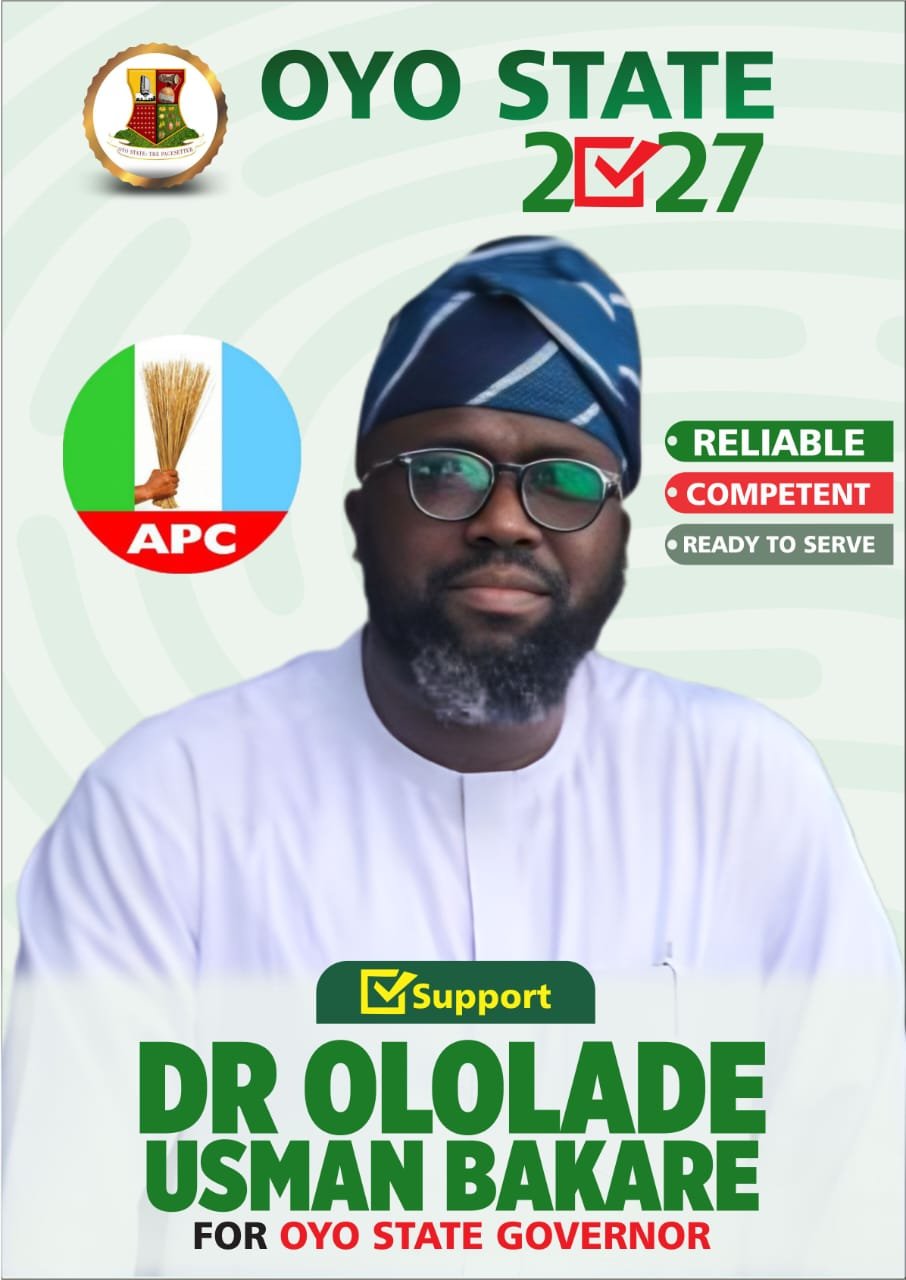
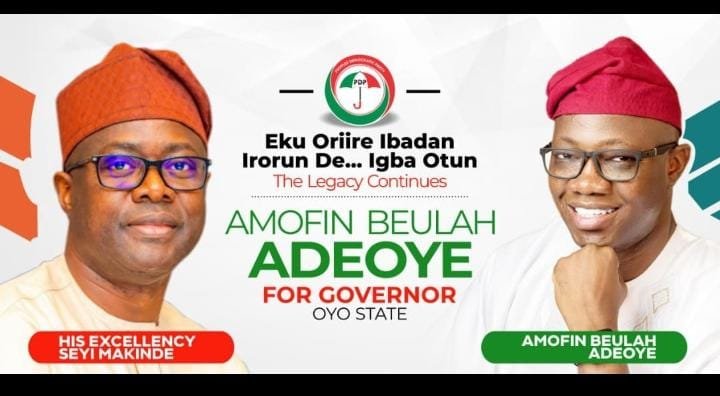
In 2018, whether one supported or opposed the administration of Abiola Ajimobi, the people of Oyo State collectively acknowledged one undeniable reality: he had raised the bar of governance to a level that made it difficult to imagine just anyone occupying the office of governor, even for a day.

Ajimobi’s elegance and candour were, for many, irresistible. His commitment to quality service delivery and adherence to standards became the benchmark against which governance in the state would subsequently be measured.
To be sure, he had his shortcomings. Some of these attracted my strongest criticisms at the time. Yet, history must record that he confronted two of the most glaring problems that had plagued the state for years — the menace of the National Union of Road Transport Workers (NURTW) and the pervasive dirtiness of the state capital.
On these fronts, he achieved considerable success.
Consequently, the people of the state implicitly handed down two mandates to whoever would succeed him: maintain order in the transport sector and sustain the cleanliness and aesthetic dignity of the state.
On the NURTW challenge, where Ajimobi arguably scored about 85 percent, his successor, Seyi Makinde, might reasonably be credited with about 60 percent. The reduction is largely because Makinde did not do enough during his first term to fully consolidate the progress made earlier.
On the issue of refuse management, however, the current administration would struggle to earn even an average mark.
So, what exactly is the point?
It concerns the political dynamics surrounding the 2027 gubernatorial election in Oyo State.
Politicians rarely enjoy hearing uncomfortable truths. Fortunately, there is little anyone can do to intimidate me into silence.
Nothing.
I am not a professional politician — if indeed I qualify to be called one at all.
But one thing is clear: come 2027, Governor Seyi Makinde will remain a decisive factor in determining who succeeds him. Anyone who underrates this reality does so at their own peril.
ALSO READ: Oyo: A Doomed Local Government Election And Governor Makinde’s Greek Gifts
Makinde has cultivated deep goodwill among civil servants, teachers, pensioners and their families. Among many ordinary citizens, he commands something close to a cult following. During the tenure of Ajimobi, some civil servants went five to six years without promotion. Makinde largely cleared that backlog, and thousands benefited from the gesture.
Salaries are paid regularly and consistently.
Consider also the story of Ladoke Akintola University of Technology (LAUTECH). Once counted among the most competitive institutions relative to Nigeria’s first-generation universities, the university suffered severe decline during the joint ownership crisis involving Osun State and Oyo State under the administrations of Rauf Aregbesola and Ajimobi.
The institution was virtually finished.
Makinde promised to resolve the long-standing Ewure-Oja ownership dispute and secure the university fully for Oyo State.
He delivered on that promise with remarkable ease.
Today, LAUTECH has regained much of its academic standing and institutional stability.
More recently, the governor recruited over twenty thousand young people into teaching and civil service positions. In a state where the civil service remains a major socio-economic backbone, such decisions resonate deeply with the electorate.
Convincing citizens that governance extends beyond these immediate benefits is, frankly, a difficult task.
Interestingly, few people are speaking about the limited inflow of foreign direct investment into the state since the beginning of Makinde’s tenure.
Nor have they forgotten his bold — some would say dangerously bold — decision to allow relatively free movement during the COVID-19 pandemic.
Residents acknowledge the poor state of many inner roads, yet public conversations often focus instead on visible junction improvements.
The disappearance of the old amusement park barely troubles the average salary earner.
Only a small number of people — particularly those whose land holdings were acquired by government — continue to protest loudly. What most citizens see instead is the massive ongoing Circular Road project. Questions about cost, land acquisition for investors, and long-term value rarely dominate public discourse.
Travel across the state and the reality becomes clear: Seyi Makinde will not collapse politically like Newcastle facing Barcelona.
Unless something dramatic happens to his metaphorical “Victor Osimhen of Galatasaray”, APC’s “Liverpool” will find the contest far from easy.
This raises the inevitable question: what path lies before the All Progressives Congress (APC)?
At present, Makinde’s most visible vulnerabilities are political rather than administrative. His party structure appears weakened. He has yet to clearly mentor or position a successor — a mistake reminiscent of Ajimobi’s own political transition challenges.
In addition, some influential grassroots mobilisers have drifted away from his camp.
These factors, alongside the controversies surrounding the throne of the Alaafin of Oyo, could potentially reduce his political reach.
For the APC to capitalise on this situation, one crucial question must be answered: who will carry the party’s gubernatorial mandate?
The party cannot afford the luxury of choosing just any candidate. Fortunately, it boasts a wide array of brilliant and experienced aspirants.
But the margin for error is slim.
Party faithful are already scrutinising the antecedents of aspirants — particularly those who have previously enjoyed or currently enjoying the mandate of progressive politics in the state.
Signals from younger party members are also becoming clearer. The youths are increasingly unwilling to continue playing supporting roles — crossing passes from the wings, organising attacks from midfield, and defending the backline — only for one “Erling Haaland” to tap the ball in from the six-yard box, claim all the glory, and behave as though victory belongs solely to him.
Ultimately, the most decisive factor will remain the personality of the candidate.
Current holders of elective office must be subjected to careful scrutiny. The party cannot afford to nominate individuals who suddenly discovered the virtue of token empowerment programmes only after deciding to test the waters for the gubernatorial ticket.
Among the aspirants, some are clearly ready.
Others, quite frankly, are not fit and proper.
For the sake of political balance and democratic competition, one can only wish the APC well.
Wale Akinremi
N4/387, Yemetu Kanbi
Korúkorù Compound
Ìbàdàn.