Public accountability thrives on scrutiny, not sentiment. It demands evidence, context, and a willingness to ask uncomfortable questions, especially of those in power. The controversy surrounding claims by Ayo Fayose that Governor Seyi Makinde received a secret ₦50 billion from President Bola Tinubu after the January 2024 Ibadan explosion provides a timely test of whether Nigerians can distinguish rigorous oversight from reckless accusation.

First, the facts and context. The Ibadan explosion at Adeyi Avenue was a tragic event: five lives lost, dozens injured, and extensive property damage. Governor Makinde visited the President to brief him, and it has since entered the public domain that ₦30 billion was disbursed by the Federal Government to support Oyo State’s response. That figure, not ₦50 billion, is the only amount that can presently be traced to credible sources.
This is where responsible scrutiny should begin, not end. Fayose’s claim of an undisclosed ₦50 billion lacks corroboration from any federal authority, documentary trail, or official statement. In a democracy, allegations of theft or concealment at that scale cannot rest on innuendo or television commentary. On this narrow point, the burden of proof remains squarely on the accuser.
But rejecting an unproven figure does not amount to giving the Makinde administration a clean bill of health. The more serious question, one that deserves sustained public pressure, is how the acknowledged ₦30 billion was utilised. Why was a detailed breakdown not published proactively? What proportion went to direct victim support, what to rebuilding damaged infrastructure, what to environmental remediation, security upgrades, or administrative coordination? These are not hostile questions; they are the minimum expectations of transparent governance.
Indeed, it would be naive to assume that all emergency funds should be paid directly to victims. Disasters create layered costs that extend well beyond compensation cheques. Still, transparency is not optional. Governments earn public trust by explaining, in detail and in real time, how extraordinary funds are spent, especially in politically sensitive moments.
Any balanced assessment must also locate this controversy within the broader record of the Makinde administration. Over nearly six years, the government has delivered visible gains in infrastructural projects, agrarian reforms, investment in public services, and fiscal stability. These achievements are real and measurable, and it would be intellectually dishonest to deny them.
Yet, achievements do not cancel out failures. One of the most enduring and consequential weaknesses of the Makinde government has been its treatment of local governments. Despite progressive rhetoric, local councils in Oyo State remain largely toothless- administratively dependent, financially constrained, and politically subordinated to the state executive. By retaining tight control over resources and limiting genuine fiscal autonomy, the state has effectively reduced local governments to implementing appendages rather than engines of grassroots development. This failure is not peripheral; it strikes at the heart of democratic decentralisation and inclusive development.
That context matters because it speaks to a broader pattern: a government that performs strongly in visible, centralised projects but is far less convincing when it comes to empowering institutions beyond the governor’s immediate reach. This is precisely why demands for transparency over emergency funds are legitimate and necessary.
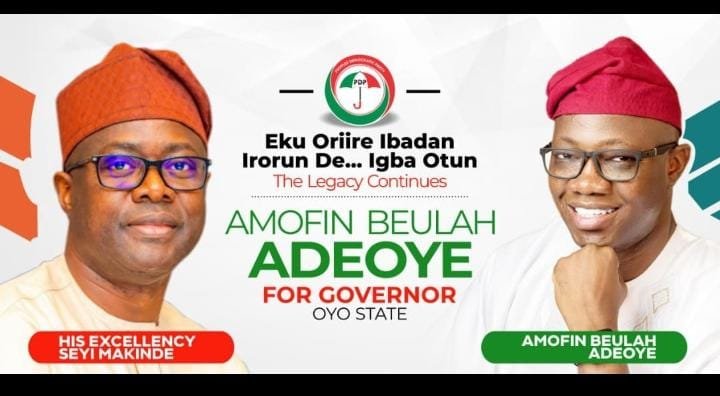
It is also important to interrogate the political theatre surrounding the allegation. Fayose’s intervention follows Makinde’s public distancing from President Tinubu ahead of 2027 and his claim that he refused to help organise the APC in Oyo State. Whether or not Makinde was right to disclose private conversations, the timing raises reasonable questions about motive. Political grievances, however, do not substitute for evidence.
Nigerians should resist two equal and opposite errors. The first is the rush to criminalise without proof, turning suspicion into certainty. The second is the temptation to treat any demand for accountability as a partisan attack. Mature democracy requires rejecting both impulses.
Separating the wheat from the chaff means this: insist that Fayose substantiate his ₦50 billion claim or withdraw it; insist, with equal firmness, that the Makinde administration publish a comprehensive account of how the ₦30 billion intervention was spent; and continue to evaluate the governor’s record in the round- acknowledging genuine achievements while refusing to gloss over structural failures, especially the hollowing out of local government autonomy.
Anything less reduces public debate to noisome theatre of the absurd.